ingenious process
CHEMICAL BONDING: FROM DEGREASING TO ADHESION PRIMER
Degreasing is the first critical step in chemically bonding metal to rubber. Once complete, the process moves on to the next phase: roughening, or in other words, sanding. This is performed in specialised blasting booths in the Metalworking department. Our largest booth is an impressive 200 m² in size. Blasting is an efficient method for cleaning and roughening metal. During this treatment, steel grit is propelled at the product using compressed air. This process removes contaminants such as rust, oils and paint residues, while increasing the surface area of the metal. This establishes an optimal bonding structure for further treatment.
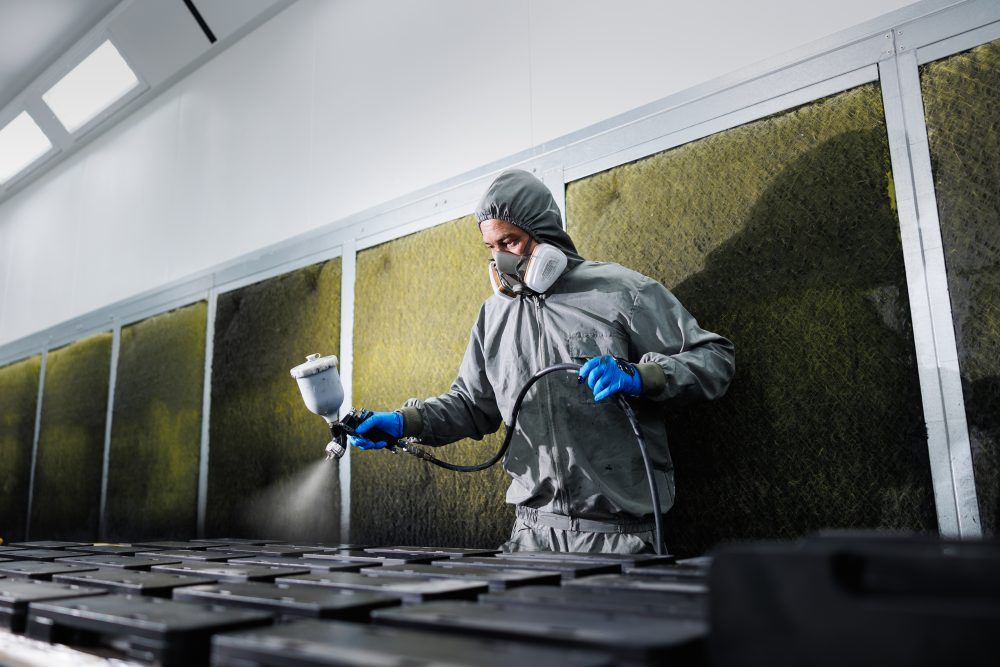
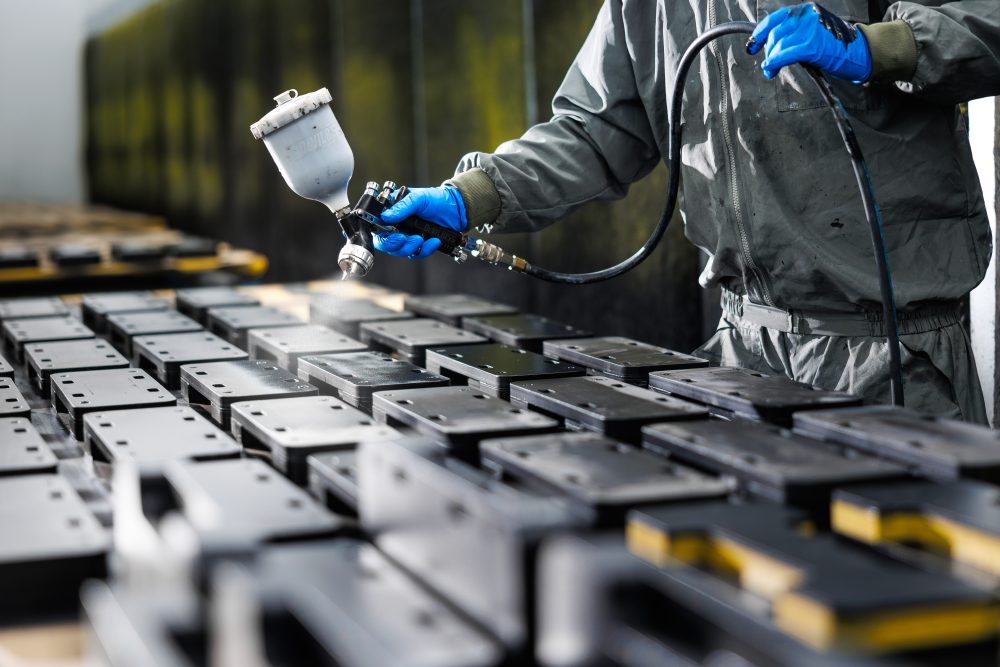
After the roughening process, the next step is to apply an adhesion layer to the metal product, ensuring the materials bond effectively. The adhesive is applied either manually or by a spraying robot, covering the roughened metal to allow the rubber to vulcanise evenly and adhere securely to the metal. It is crucial that this adhesive layer is neither too thick nor too thin, as it plays a vital role in the heat-induced bonding of the rubber to the metal.
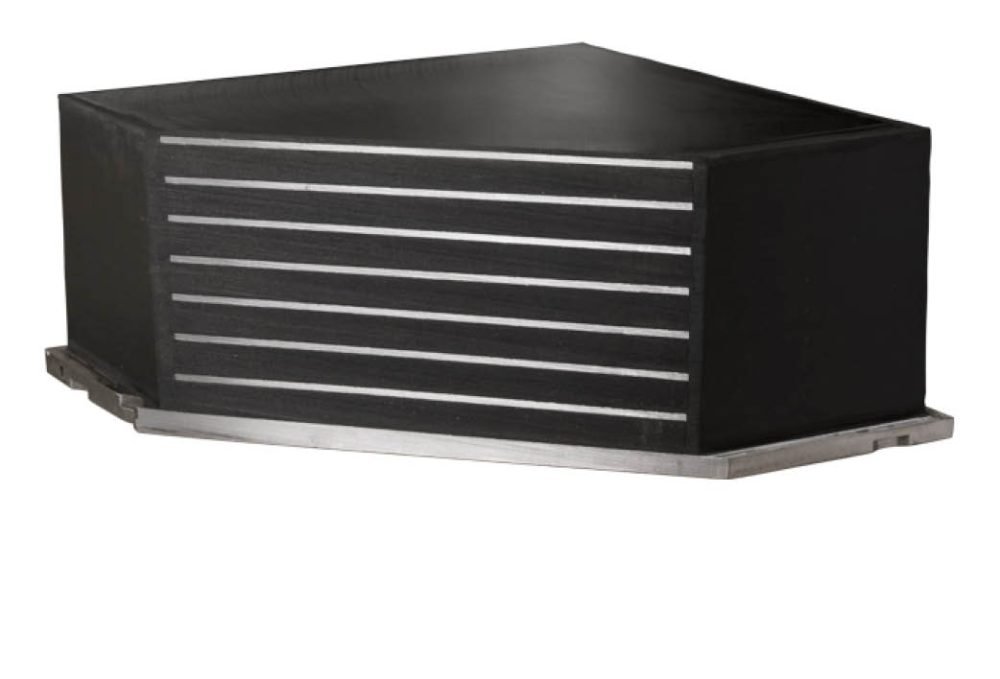
The final step is vulcanisation. The product is placed in a mould within a moulding machine, where the heat and pressure cause the molecules of the metal and rubber to bond. And so, with exacting precision, this unlikely alliance is forged.
down to the smallest details
MECHANICAL BONDING: A SIMPLER PROCESS
Mechanical bonding of rubber and metal is significantly simpler. The method is pre-designed to ensure the rubber remains securely attached to or around the metal. For example, a notch or holes may be made in the metal, allowing the rubber to flow into or through these openings during the vulcanisation process, creating a bond with the metal.
Our technical team carefully plans the optimal bonding approach and prepares a quotation for the customer. Once approved, we produce the mould and initial samples. After the samples have been approved, full-scale production begins.