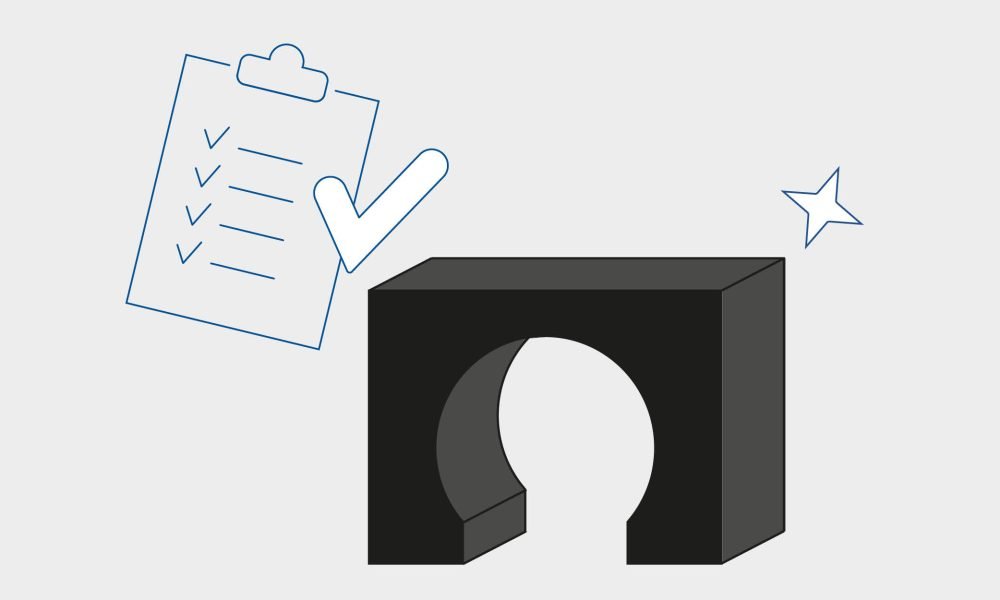
designing the mould
THE DESIGN PHASE:
FROM PRODUCT SKETCH TO MOULD
Creating a rubber product requires not only a design but also a mould, which acts as the ‘form’ that makes production of the desired rubber product possible. After the product sketch is created, the next step is the mould drawing, prepared by our mould engineers. Using SolidWorks, a specialised software application, they design rubber products and moulds in both 2D and 3D. Through precise calculations and simulations, the mould is optimised for maximum efficiency. Once the design is complete, the mould is manufactured by one of our trusted partners.
from plastic to elastic
THE PRODUCTION PROCESS:
TESTING AND VULCANISING
Once the mould is received, trial production can begin. The mould is filled with a rubber compound made up of polymers, fillers, oils, additives and vulcanising agents. At this stage, the rubber feels soft, similar to chewing gum. However, under the high pressure and heat inside the moulding machine – ranging from 120 to 180 degrees Celsius – vulcanisation occurs. This is similar to what happens when bread is baked: the substance undergoes a transformation. During this process, the rubber compound changes from plastic to elastic. After vulcanisation the final product is ready.