most popular type of rubber

SBR rubber is the oldest and most widely used synthetic rubber in the world, with an impressive 65% of rubber products globally made from it. From rubber slats on baggage carousels to shoe soles, SBR is a timeless classic that never goes out of style.

SBR (styrene butadiene rubber) is composed of butadiene rubber with approximately 10 to 35% styrene. Not only is it the first synthetic rubber ever developed, but it also remains the most commonly used. Around 65% of all rubber products globally are made of SBR, including car tyres, conveyor belts and other hard-wearing parts. Synthetic rubber has excellent mechanical and elastic properties, making it highly resistant to wear and ageing. From airport baggage carousels to the soles of shoes, SBR is truly found everywhere!

rise due to World War II

By the late nineteenth century, the automotive industry was beginning to flourish, and rubber became a key material in car manufacturing. However, it was not until World War II that synthetic rubber production truly became a necessity. Natural rubber was heavily used in various military vehicles, leading to ever-increasing demand. By the 1970s, SBR had even surpassed natural rubber in popularity.

versatile

It is no surprise that SBR is so popular – it can be used in nearly every industry. It is hardwearing, even under significant friction, and offers excellent tensile strength and tear resistance. Unfortunately it is also less flexible than natural rubber. The solution? Blending the two to create the ideal composition.

SBR is resistant to oil-laden air, water, industrial water and glycol. This type of rubber can withstand temperatures ranging from -50 to +100 °C and is well-suited for damping, insulation and shock absorption applications. Material hardness varies between 30 and 95° Shore A.

While SBR is a versatile performer, it is not recommended for use in contact with mineral oil, hydrocarbons, fuels or solvents. What rubber is suitable for those conditions? NBR, for example!

Background information

WHAT IS SHORE HARDNESS?

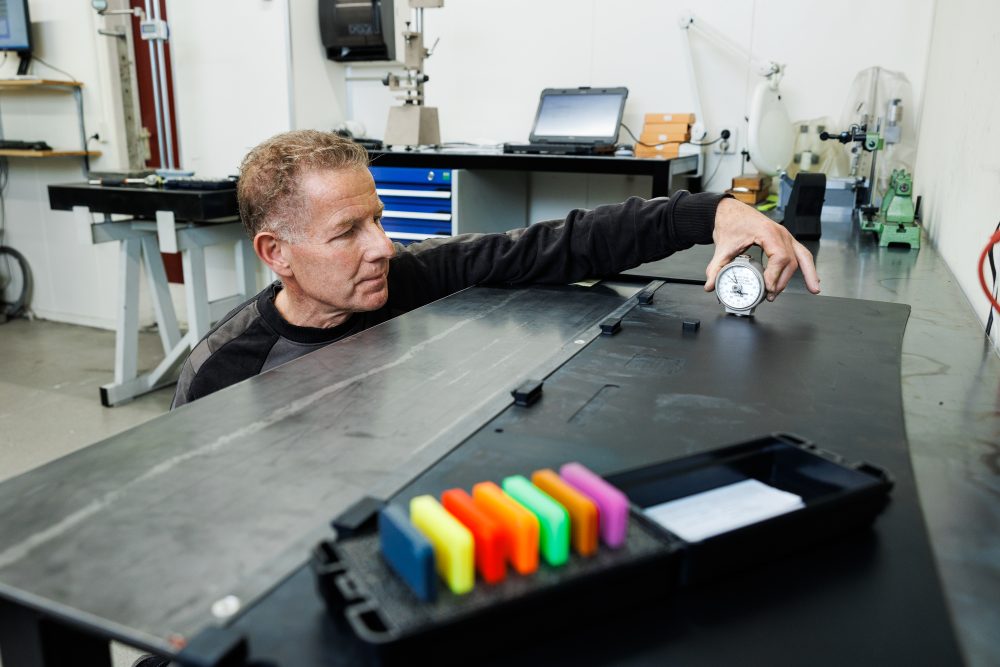
The hardness of rubber and plastic is measured on the Shore hardness scale. The instrument used to measure it is called a durometer. The Shore A scale ranges from 0 to 100. For illustrative purposes: a pencil eraser is soft and measures low on the scale, whereas a skateboard wheel is hard and scores high. The higher the number, the harder the material. Materials harder than Shore A fall into the Shore D class, which typically includes plastics like those used in safety helmets. Softer materials, such as gummy bears, fall under the Shore 00 class.

from shoe soles to bearing pads

From anti-slip mats to shoe soles, and from bearing pads in constructions to car tyres, SBR is used extensively both indoors and outdoors. It is also indispensable in the construction, maritime and industrial sectors. SBR is used to prevent leaks or block the flow of air. It serves as insulation, sealing material or for absorbing vibrations and shocks.

Whitepaper

Bianca
Marjelle
Stefan

Facing a challenge? We have the expertise

Together, we create the solution

Ask your question