design is key
FORM & FUNCTION:
PRODUCTION OF RUBBER BUFFERS
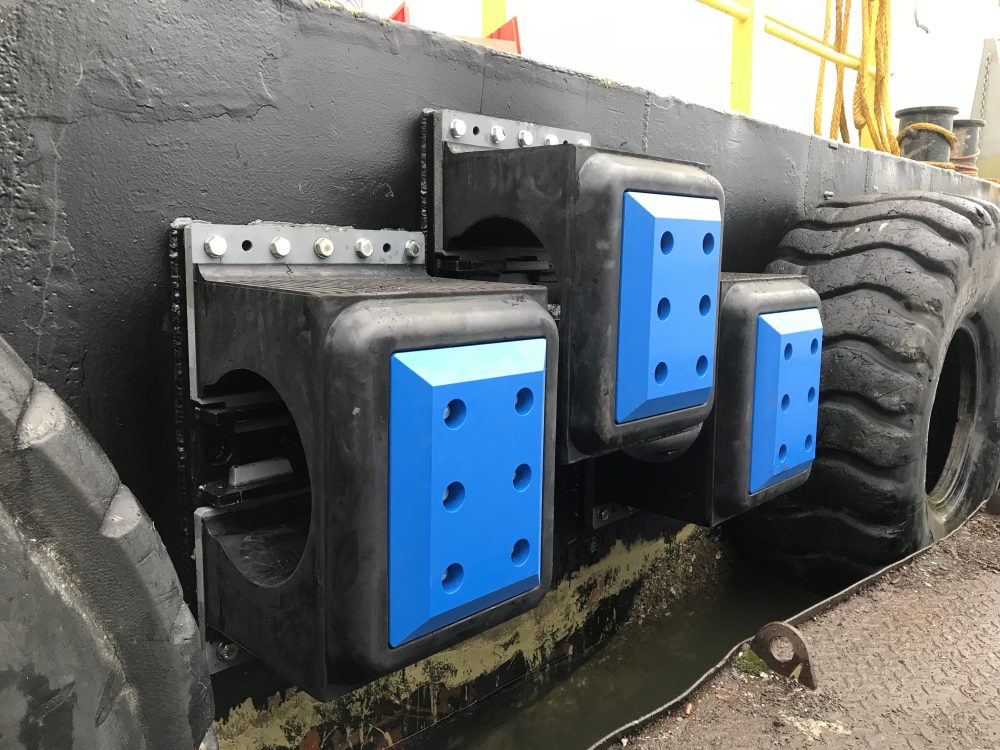
When producing rubber buffers, the primary focus is their function: using the right grade of rubber to absorb impacts effectively. For instance, the rubber used in a ship fender to protect a quay wall is very different from the rubber used on the back of a truck.
In addition to functionality, the design is crucial for the optimum performance of a rubber buffer. For example, cutting a flat ring from a sheet of rubber might work as a seal, but it may fail to withstand sufficient pressure, resulting in inadequate sealing. By changing the design to a round O-ring, a proper seal can be achieved.
Rubber is highly formable, and every application requires a specific shape. Square rubber wheels will not work, but round ones will. It is not just about the material but also the design. Engineers provide advice based on calculations that predict how a product will behave under pressure. Simulations offer deeper insights into real-world performance, allowing more accurate and tailored mould production for manufacturing.
Interesting to know: rubber buffers are among the few products RIS produces using moulds made in-house. This allows for quick adaptation and production. Of course, there are also plenty of options for custom-made rubber buffers.