Seals come in many shapes and sizes. Although they are made from different materials, rubber is often the preferred choice.

This is due to the unique properties of rubber. It reduces vibrations and stresses, is waterproof and easily returns to its original shape. The choice of material for a rubber seal is important and requires a great deal of knowledge and experience. RIS Rubber has this knowledge and experience in-house and can therefore provide sound advice.
COMBINATION RINGS

A combination ring is a sealing ring that combines rubber and metal for high-pressure applications, often used in sand and gravel pipelines. It consists of two rubber rings (with hard and soft rubber), often reinforced with metal, which provide a durable, wear-resistant seal for gate valves, for example. The combination of metal and rubber provides both mechanical stability and a reliable seal. A combiring is mainly used in static seals.

WHAT IS A SLIDE VALVE?
When closing the pipe with a gate valve, a metal valve is inserted between the hard parts of the two rubber sealing rings. This makes the whole thing look a bit like a guillotine. The soft rubber allows the seal to compress. The hard rubber part of the seal presses against the metal valve and must therefore be highly wear-resistant.

BOTTOM DOOR PROFILES

Bottom door profiles are seals that ensure that large doors in the bottom of a (dredging) vessel remain properly closed during dredging. These bottom doors are opened when the dredged material is unloaded.

RIS Rubber produces many bottom door profiles for large dredgers (also known as trailing suction hopper dredgers). The profiles are produced in sections at our premises and then “welded” together using a special compression press. This makes the profiles scalable and allows them to be produced in different sizes.

RUBBER SHAFT SEAL

Shaft seal is the collective name for rubber with a sealing function around a shaft. They are used, for example, in rotating elements that can be found in hydraulic pumps, among other things. Shaft seals often have to withstand the pressure generated by continuous movement. They are used, among other things, to protect moving parts in bearings, for example. The bearing is protected by a lubricant, and the shaft seal ensures that the lubricant remains in the bearing, keeping out contamination from dirt or other liquids. RIS Rubber manufactures a wide range of rubber shaft seals.

A rubber shaft seal can also be produced with both hard and soft rubber qualities. The hard rubber of the seal is for mounting, which provides a solid base. The soft rubber provides the actual seal, as it is much easier to deform.

LIPSEAL

A lipseal is a type of shaft seal. Lipseals are used to seal rotating elements such as hydraulic pumps. The name comes from the flexible “lips” that rest against the shaft. The service life of a lipseal depends on the environment and the amount of wear it undergoes. They often have to withstand the pressure of constant movement and conditions such as grit and contamination.

It is important to check lip seals regularly and replace them if damage is visible. High temperatures are the biggest challenge for a lipseal. That is why it is essential to know in advance what the operating temperature of the seal is. High temperatures thin the lubricant, causing the rotating lip seal to dry out and become brittle.

RUBBER SEAT

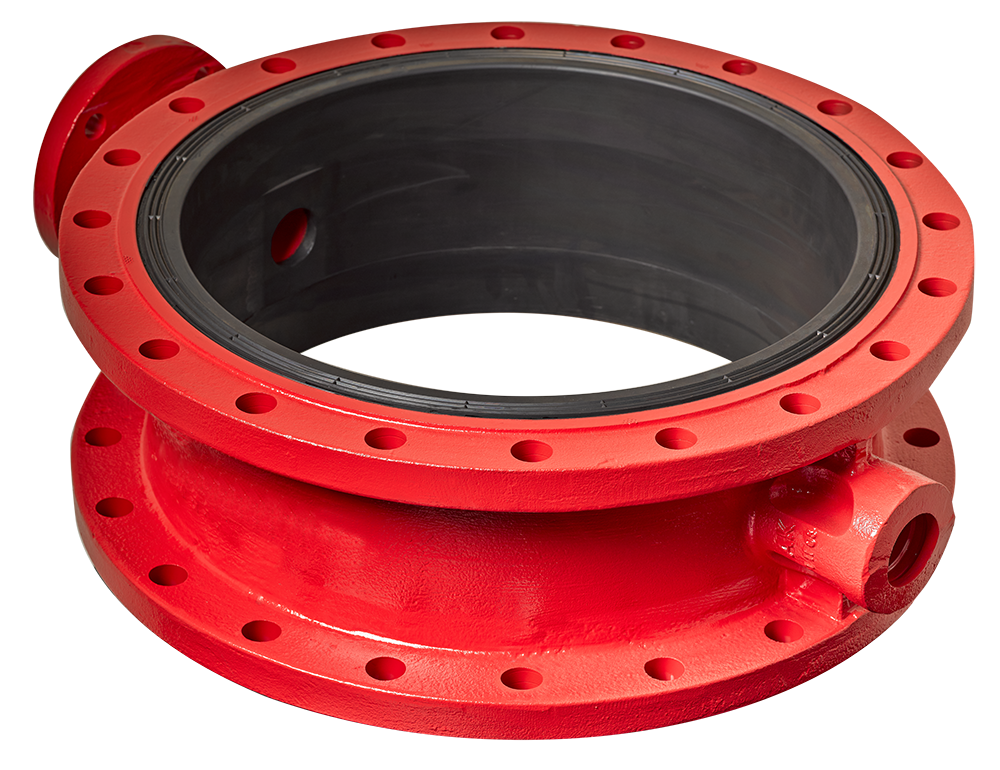
A rubber seat is a static seal. They are used in butterfly valves and gate valves, for example. A rubber seat seals by compression and ensures a leak-tight seal when a valve closes. RIS Rubber produces 65,000 seats annually in many sizes, types and qualities. We can produce these seats as solid rubber seats or vulcanise them directly onto the metal housing.

REINFORCED SEATS
Reinforced seats are also an option. These are seals that contain a reinforcement, such as a metal part that is vulcanised into the product. These seats are used specifically in applications where the pressure in the pipe is very high. Our production sites have a special area for pre-treating metal so that the rubber seat can be connected to the metal butterfly valve. Connecting rubber and metal is quite a process!

CUT SEALS

At our sister company Hofland in Tolbert (Groningen), seals are cut daily on the CNC-controlled cutting plotter. We can produce these seals in many different materials, each with their own characteristics. Examples include Temasil, AFM34, Unigraph 500 and graphite sheet material. All of these can be cut in small or large series with short lead times.

Bianca
Marjelle
Stefan

Facing a challenge? We have the expertise

Together, we create the solution

Ask your question