resilient

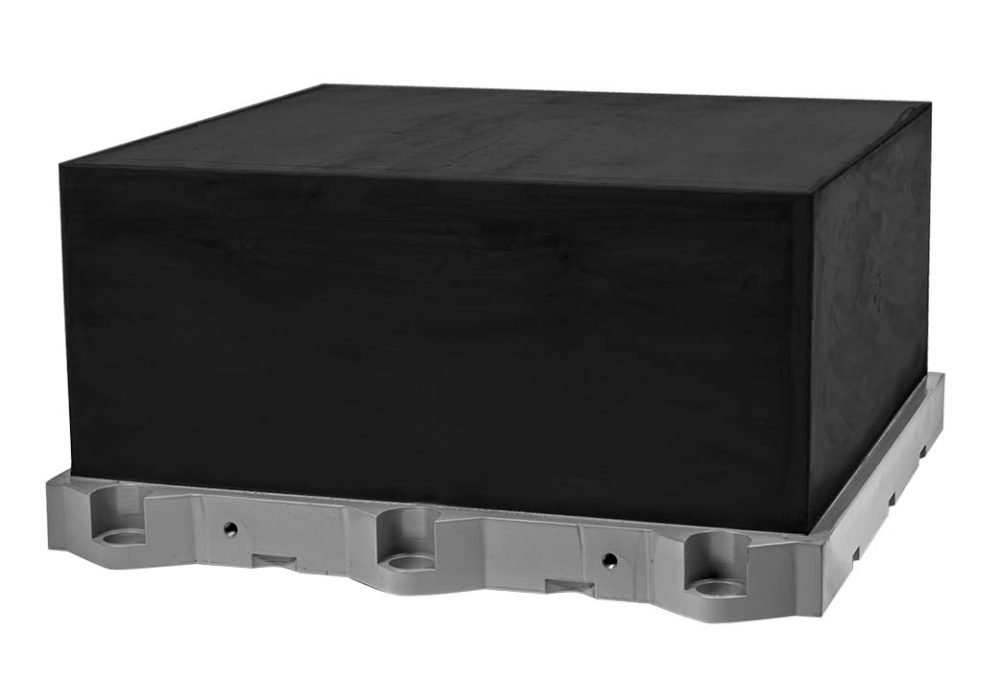
Rubber is ideal for absorbing vibrations and strain, which is why it is widely used in the form of shock pads, bridge bearings and bearing pads. In fact, bridges would collapse without these rubber support points.

Ferry explains it in detail in the video below: a shock pad is a rubber block used as a damping support for a heavy structure. Shock pads absorb vibrations and the associated forces, including not only the strain caused by the heavy load of the bridge but also that within the structure itself. Structures can expand or contract under the influence of heat or cold, and the resilience of rubber is ideal for absorbing this tension. A shock pad is also referred to as a bridge bearing or laminated elastomeric bearing pad.

perfect combination of two types of rubber

WHAT REQUIREMENTS MUST SHOCK PADS MEET?

Shock pads are subject to heavy, static loads, requiring special materials with minimal creep characteristics and no permanent deformation under compression. It is essential that the rubber does not collapse under continuous pressure, which is why shock pads are often made from natural rubber.

Astute readers may wonder: what happens if the bridge bearing comes into contact with oil? Of course, natural rubber is not appropriate for this. To leverage the desirable properties of natural rubber while addressing this limitation, the exterior of the shock pad is coated with a few millimetres of chloroprene rubber, which is oil-resistant. Clever!

steel combined with rubber

RUBBER BEARING PADS

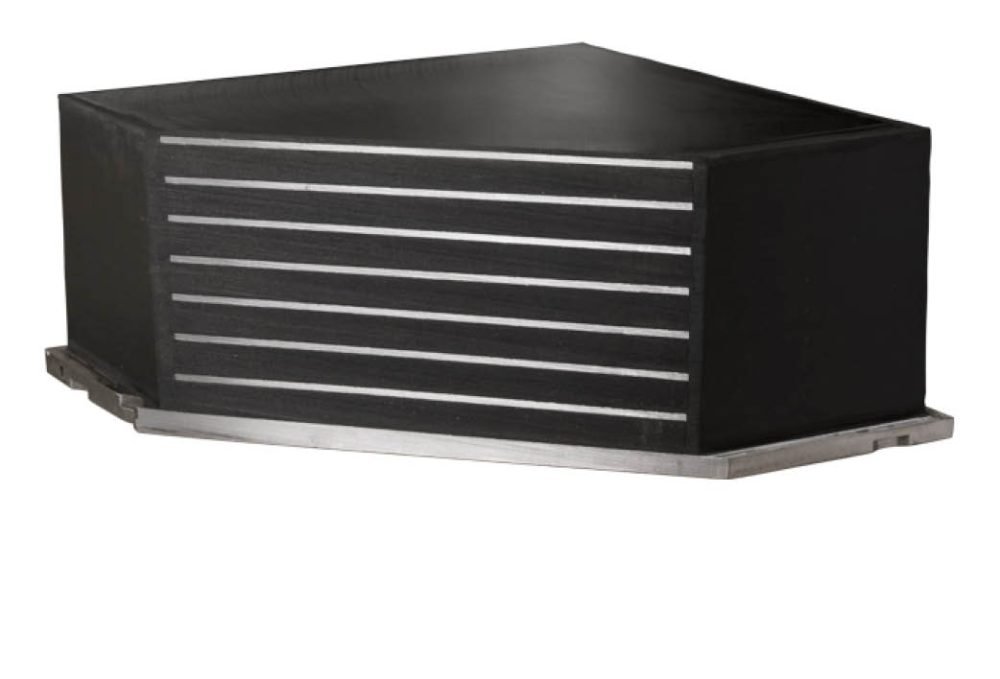
In addition to shock pads and bridge bearings, there is another term for this type of product: bearing pads. In Dutch, all these products are grouped under the term veerelement (spring element), but in practice, the terminology varies depending on the product’s specific placement.

The construction of bearing pads depends on the forces they need to bear and the available dimensions. They are often composed of laminated horizontal layers of rubber and steel plates, which are bonded together through vulcanisation. The addition of steel layers enhances the product’s ability to withstand pressure. Another key factor is spring stiffness, or in other words, how resilient and shape-retaining the pad is. Using mathematical formulas, the optimal spring stiffness is calculated for each application, followed by testing to ensure these requirements have been met.

benefits

IMPORTANT CHARACTERISTICS OF SHOCK PADS & BEARING PADS

There are a number of factors that make rubber so suitable as a support product:

  • Rubber absorbs vibrations;
  • It naturally provides grip, ensuring that heavy loads stay put.
  • Large, heavy rubber shock pads must endure immense pressure, which is why the combination of metal and rubber is often chosen.
  • Rubber always seeks to return to its original shape. Its resilience and elasticity allow it to maintain its function for a long time, making it highly durable.
  • It resists chemicals, oils, antifreeze and other common contaminants.

preventing damage

APPLICATIONS OF RUBBER BRIDGE BEARINGS

Shock pads, bridge bearings and bearing pads are used in a wide variety of applications. Bridges, for instance, rest on rubber bearings to absorb vibrations and strain. Tall buildings often rely on bearing pads to absorb earthquake-induced vibrations, significantly reducing the risk of collapse.

Shock pads are also widely used in marine and offshore environments, such as on oil rigs. In these applications, shock pads improve working conditions on the platform while also reducing wear on the systems.

Whitepaper

Bianca
Marjelle
Stefan

Facing a challenge? We have the expertise

Together, we create the solution

Ask your question